“I would cry very often. I couldn’t control my emotions.”
Lazar Dimitrijevic first came to Samos, Greece, last March. The 23-year-old, who was earning his master’s degree in human security, took a short trip to the island to see the situation “with my own eyes.” What he found rattled him.
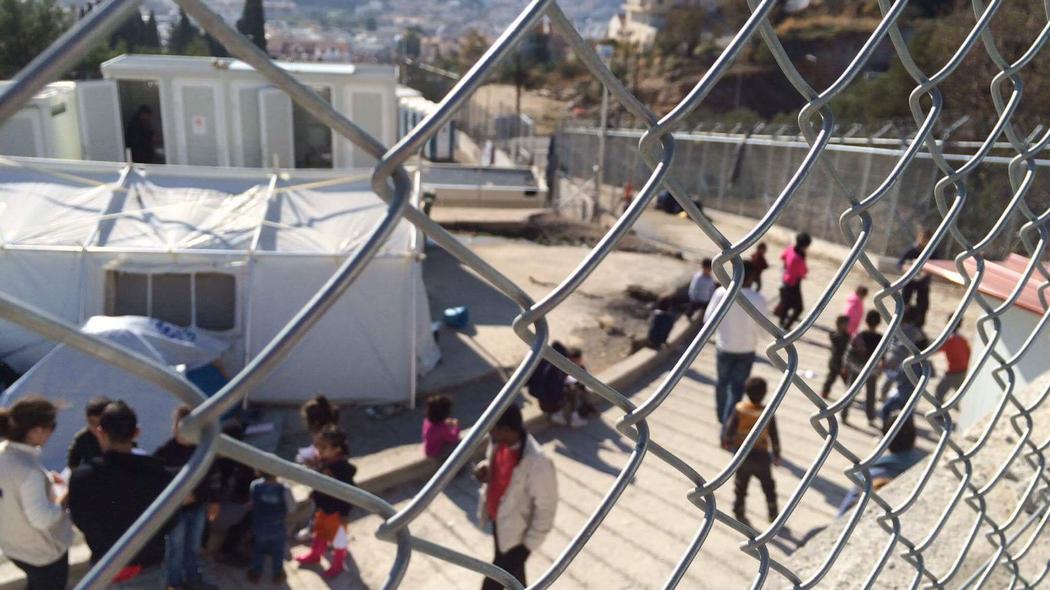
Dimitrijevic remembers “the sight of men, women, and children being detained in an open-air prison resembling a concentration camp.” He says the camp was closed at the time of his visit, so the people were locked inside. He shook their hands through the fences, what he described as “a very strong experience that urged me to take action.” He decided to come back to do something.
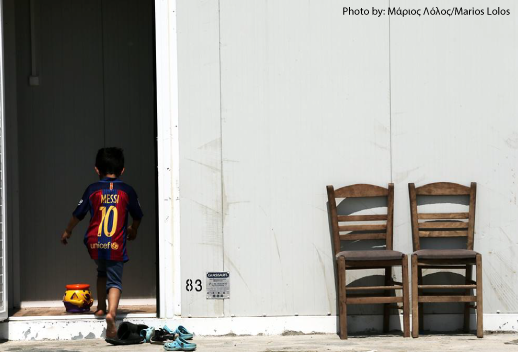
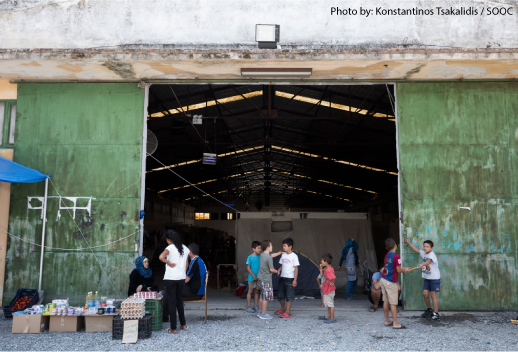
On his return, he worked with an NGO at one of the outdoor camps on the island, unprotected from the cold winters and brutally hot summers, distributing clothing and working with the unaccompanied minors. Three times a week, he gave lessons in English, art, and music, while completing academic research on the teenagers in the camp. “I would feel overwhelmed at times because there were times we had to say, ‘No, you cannot have two pairs of pants’ to someone who clearly has nothing,” he told me. “We would have to say no because if we don’t stick to the system in place and display favoritism to one it would be unfair to others.”
For Dimitrijevic, who is Swiss and earning his degree in Denmark, the reality in the camps felt like worlds away from his own life.
“At the beginning, it was really hard,” he said. “I would cry very often. I couldn’t control my emotions.”
Once, a man intentionally set himself on fire in the camp. “It was during the afternoon when many kids were playing around,” he told me. “It changes your perception of problems in your life. It makes you nauseous to compare the problems.”